
If you are asking, “Do I Have ADHD as an Adult Quiz?”, the honest answer is that an online quiz can help you screen your symptoms, but it cannot diagnose you. Adult ADHD quizzes are designed to see whether your experiences match common adult ADHD patterns, so you can decide whether it is worth speaking with a qualified clinician.
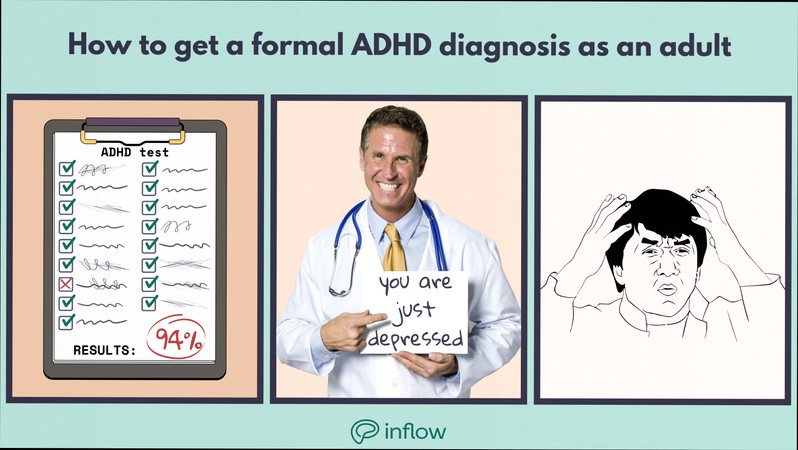
Most quizzes ask you to think about the past 6 months and rate how often certain behaviors have affected your daily life. Typical areas include inattention, restlessness or fidgeting, impulsivity, time management trouble, forgetfulness, emotional dysregulation, and chronic underachievement, often aligned with frameworks like the DSM-5 or tools such as the Adult ADHD Self-Report Scale (ASRS).
Because symptoms can overlap with anxiety, depression, sleep issues, stress, or other medical conditions, the most reliable next step is to use the quiz results as a starting point for an in-person evaluation. Share your scores and examples with a psychiatrist or other healthcare professional so they can determine whether you meet diagnostic criteria and what support would help most.
What An Adult ADHD Quiz Can And Cannot Tell You
Adult ADHD quizzes can be useful for organizing your thoughts, but they are not a diagnosis. They typically screen for patterns of symptoms that commonly show up in adult ADHD, often based on frameworks like DSM-5 and tools similar to the Adult ADHD Self-Report Scale.
If you are wondering do i have adhd as an adult quiz is “enough,” the honest answer is no. A quiz can suggest whether ADHD is worth considering, while a clinician decides based on history, impairment, and rule-outs.
Think of a screener as a starting point, not a verdict. Your lived experience and your medical history matter more than any single score.
Why Many Screeners Ask About The Last Six Months
Most adult ADHD screeners focus on how often symptoms have affected you over roughly the past 6 months. That time window helps capture whether the pattern is recent and ongoing rather than a short-term stress response.
ADHD symptoms are also expected to persist over time. So the questions usually look for repeated behaviors like trouble staying focused, forgetting responsibilities, or acting impulsively across everyday settings.
When you answer, try to be consistent about what “often” means in your life. If a question feels vague, choose the response that best matches your day-to-day reality rather than your best or worst days.
Matching Symptoms To DSM-5 Patterns Without Panic
DSM-5 criteria emphasize symptom patterns, timing, and impact. For many adults, that means symptoms often need to be present since childhood, even if they were not recognized back then.
Clinicians look for a combination of inattention and/or hyperactivity-impulsivity symptoms, lasting at least 6 months, showing up across two or more settings. They also evaluate whether something else better explains your difficulties.
So if your quiz results suggest a “possible ADHD pattern,” it is still appropriate to stay calm and get clarity. ADHD is common, but so are other causes of distractibility and executive-function problems.
Key Scenarios Adults Commonly Report With Inattention
Inattention in adults is often less about “not paying attention” and more about attention drifting at the wrong moments. Many people notice difficulty finishing tasks, losing track of details, or starting many things and completing few.
Common real-life examples include rereading the same paragraph, missing steps in multi-step tasks, misplacing items like keys or documents, and struggling to organize work or household routines.
- Work tasks feel harder than they “should,” especially when there is no immediate deadline.
- Meetings blur together, and you later realize you missed decisions or action items.
- Phone notifications help at first, then the constant switching becomes exhausting.
Hyperactivity Impulsivity Can Look Different In Adults
Adults may not run around inappropriately, but hyperactivity-impulsivity can show up as internal restlessness. Some people describe feeling “wired,” fidgeting, tapping, or struggling to stay still during long stretches.
Impulsivity can also be social and emotional. You might interrupt others, speak before thinking, make quick purchases, or react sharply during conflict, then regret it later.
When a quiz includes items about restlessness, impatience, or acting on the moment, it is trying to capture that broader pattern of impulsive momentum and inconsistent self-control.
How To Turn Quiz Results Into A Helpful Clinician Conversation
A good next step after any adult ADHD screener is to share your results with a qualified clinician. You can help the conversation by bringing specific examples of where symptoms show up and how they affect work, relationships, and daily responsibilities.
Clinicians often explain the difference between screening and diagnosis using clinical screening tools while also checking childhood history and impairment. This matters because adults may recognize patterns now even if others missed them when they were younger.
Consider using a short summary format like the one below to translate your quiz output into actionable talking points.
| Quiz Output | What It Might Mean | What To Bring To Your Visit |
|---|---|---|
| High score (example 20+) | Pattern suggests ADHD traits | 3-5 specific examples from 6 months |
| Moderate score (example 12-19) | Symptoms may be mixed or context-based | Notes on triggers and best/worst days |
| Low score (example 0-11) | Less consistent with ADHD pattern | Why you still feel concerned |
| Mixed pattern | Inattention or impulsivity is stronger | How each type affects daily life |
| Childhood continuity (before age 12) | Supports symptom history over time | Report cards, stories, or old feedback |
After the table, write down any questions you have about alternatives. If possible, bring a few childhood anecdotes or school notes, because “since before age 12” is often the deciding factor.
A Simple Scoring Mindset For Screeners
Most adult ADHD quizzes use a symptom frequency scale, not a pass-fail grade. Your goal is not to “game” the quiz, but to reflect accurately on how your symptoms typically show up.
If your result is high, it does not automatically mean ADHD, but it does suggest that an assessment could be worthwhile. If your result is low, it still might be worth discussing concerns if your symptoms cause clear impairment.
Use your quiz as a prompt for tracking for the next couple of weeks. Write down events where attention, organization, impulse control, or emotional regulation noticeably broke down.
Red Flags That Mean You Should Seek Assessment Sooner
Consider seeking professional assessment sooner if symptoms are causing significant impairment, not just inconvenience. This can include job instability, repeated conflicts, unsafe impulsive choices, or chronic inability to meet responsibilities.
If you are experiencing worsening functional problems, severe sleep disruption, or emotional blow-ups that feel out of character, that is also a reason to move beyond self-checks.
Even if ADHD ends up not being the primary cause, assessment can still bring relief by identifying the real bottleneck and the right support.
Common Comorbidities That Can Mimic ADHD Symptoms
Many conditions can look like ADHD on a screener because they affect attention, motivation, and emotional regulation. Anxiety can make your mind race and make it hard to focus on boring tasks.
Depression can reduce drive, slow down organization, and make it harder to initiate routines. Sleep disorders can cause brain fog that resembles inattention.
Clinicians consider substance effects, medication side effects, trauma-related symptoms, and learning differences too. This is one reason why quiz results should not be used for self-diagnosis.
How To Prepare For Your Appointment After Taking A do i have adhd as an adult quiz
Preparation helps your clinician verify the pattern instead of guessing from a single questionnaire. Start by compiling your quiz answers and a brief summary of your score result and the main items that felt most accurate.
Next, gather real examples of impairment. Bring details about how symptoms affected performance at work, parenting, studying, driving routines, finances, or household tasks.
- Write a short timeline of when difficulties started, even if you only know “it was always there.”
- List two settings where symptoms show up, like work and home, or school and social life.
- Bring evidence if you have it, such as school reports, emails, or supervisor notes.
Practical Habits That Can Help While You Wait
If you are waiting for an evaluation, you do not have to sit idle. Practical supports can reduce daily friction and help you observe what truly improves your symptoms.
Start with external structure since ADHD brains often do better when reminders exist outside your head. Calendars, task managers, timed checklists, and visible “next steps” can lower the cognitive load.
- Use a consistent “start ritual” for work or studying, like opening one document and writing the first line.
- Set short focus sprints with a timer and a clear task definition for each sprint.
- Reduce the number of active tabs, both on your browser and on your to-do list.
Even if the diagnosis is different from ADHD, many executive-function supports still help. The key is to track results so you can tell your clinician what worked.
Mistakes To Avoid When You Try To Self Diagnose
One common mistake is treating a quiz score as a final identity. Scores can be influenced by mood, sleep, stress, and whether you understood each item clearly.
Another mistake is ignoring the requirement for symptom onset before age 12. Adult ADHD is not only about feeling scattered now, it is also about a long-standing pattern that has persisted and adapted.
Finally, avoid replacing clinical assessment with internet explanations. If your quiz suggests ADHD, use that as a reason to seek evaluation, not as a substitute for professional judgment.
Can An Adult ADHD Quiz Help You Decide What to Do Next?
When you take a do i have adhd as an adult quiz, what does an adult ADHD quiz typically measure?
An adult ADHD quiz usually measures how often you experience common ADHD-related patterns such as inattention, restlessness, impulsivity, and time-management difficulties over a recent period, often the last 6 months.How accurate are adult ADHD quizzes for answering do i have adhd as an adult quiz concerns?
Adult ADHD quizzes can be helpful for screening and self-reflection, but they are not diagnostic, because symptoms can overlap with stress, anxiety, sleep issues, or other conditions that require clinical evaluation.What symptoms do adult ADHD quizzes ask about, and why do they matter for do i have adhd as an adult quiz results?
Most screeners ask about symptom frequency and impact, such as forgetfulness, difficulty sustaining focus, emotional dysregulation, chronic underachievement, and impulsive behavior, to see whether the pattern fits ADHD features.How does an adult ADHD quiz relate to DSM-5 criteria and the diagnosis for do i have adhd as an adult quiz?
A formal diagnosis uses clinician judgment and DSM-5 criteria, including whether symptoms began before age 12, persist for at least 6 months, and occur across more than one setting—details that a quiz alone cannot confirm.Can an adult ADHD quiz miss ADHD, or mistake another condition for ADHD when you wonder do i have adhd as an adult quiz?
Yes, some quizzes can be inaccurate because other issues like thyroid problems, depression, anxiety, trauma, substance use, or chronic sleep deprivation can produce similar attention and self-regulation symptoms.What should you do after an adult ADHD quiz when you still ask do i have adhd as an adult quiz?
If the quiz suggests ADHD, the best next step is to share your answers with a qualified healthcare professional for an in-person assessment, which may include history, symptom timeline, and screening for related conditions.
Adult ADHD Quizzes Can Help, But They Do Not Diagnose
If you are considering a do i have adhd as an adult quiz, treat it as a quick screening tool that may flag patterns like inattention, restlessness, or impulsivity, but not as a medical diagnosis. The most reliable next step is to review your results with a qualified clinician who can assess symptoms over time, rule out other causes, and determine whether an adult ADHD diagnosis fits.